Bikes / Adventure
BMW
BMW R 1250 GS
Five years. 86,000 km. One word: RELIABILITY.
Milos Falat
Rider · September 14, 2026
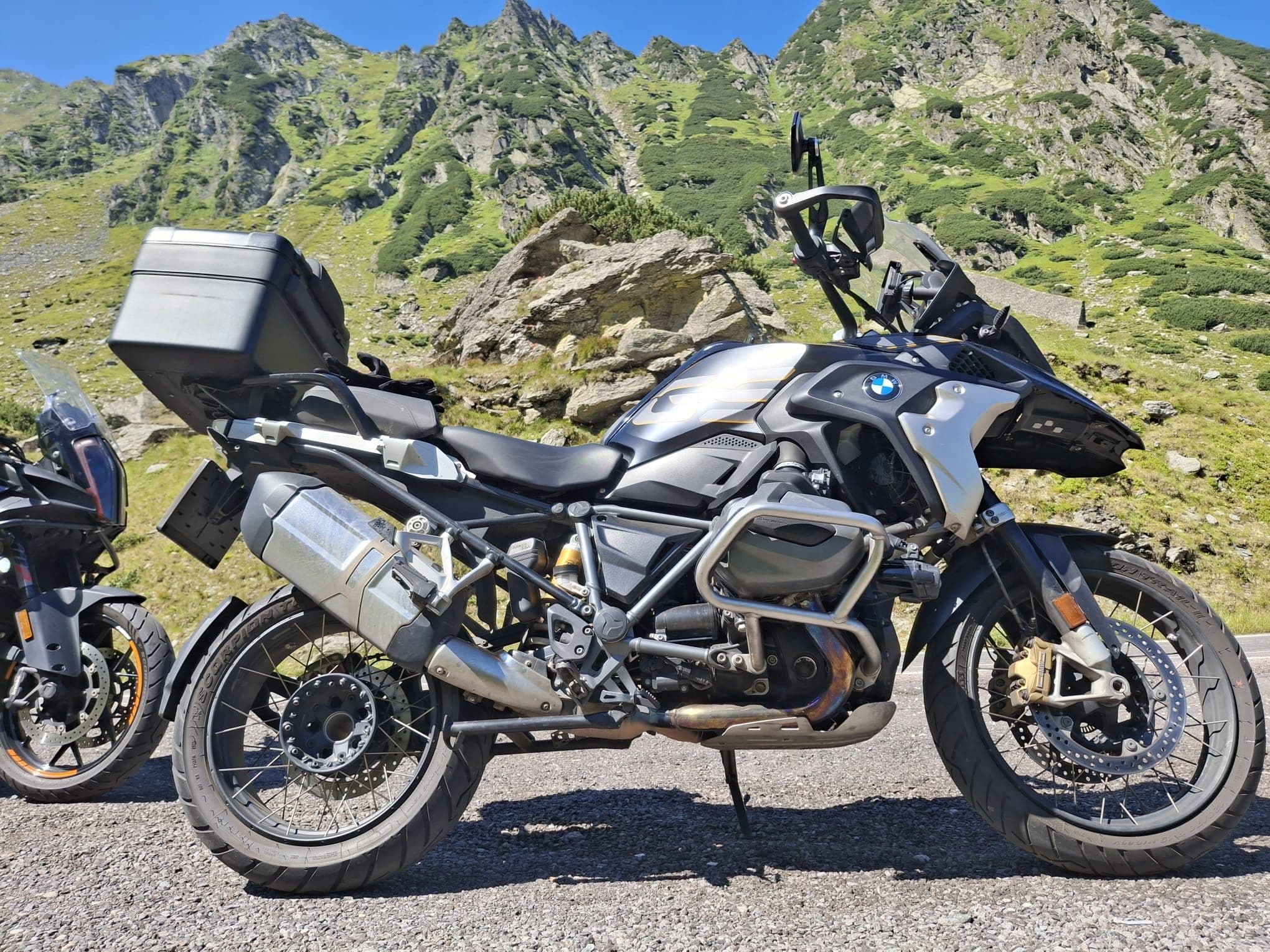
I have decided to write a review of my motorcycle in order to share the experience I have gained over five years of ownership and 86,000 kilometres of riding. The motorcycle was purchased new, has been maintained meticulously, and has received full servicing at every prescribed maintenance interval.
At the outset, I must state that over the course of these 86,000 kilometres the motorcycle has never once broken down, nor has it required any technical or other intervention. I have always reached the destination of my planned route, which I consider to be the single most important characteristic of this machine: RELIABILITY.
To date, my travels have been confined to Europe, covering the following countries: Slovakia, the Czech Republic, Poland, Hungary, Romania, Slovenia, Croatia, Germany, Austria, Belgium, and the Netherlands.
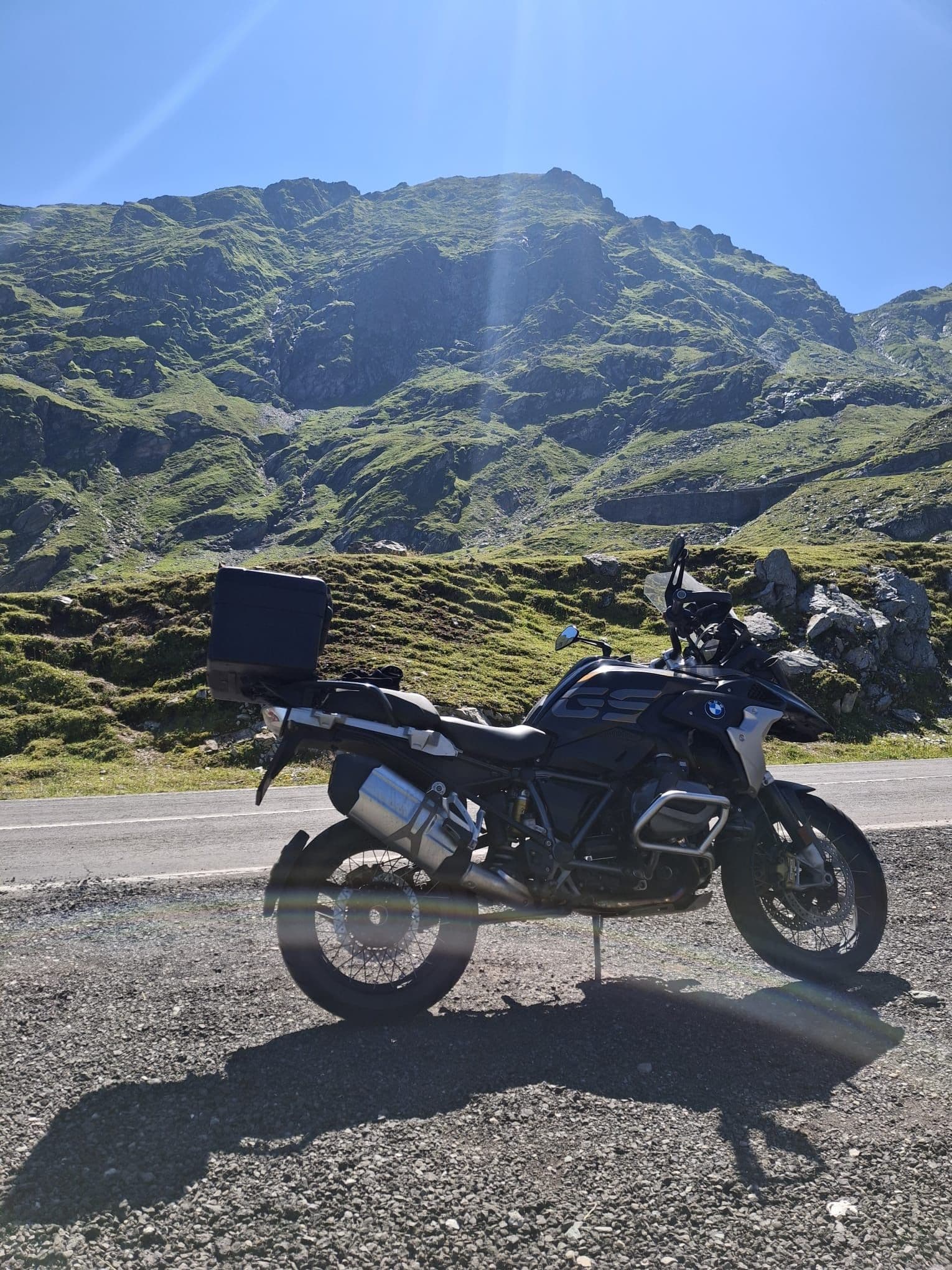
The longest distance I have covered in a single day was 1,100 kilometres, from Bratislava to the Pelješac peninsula in Croatia (a combination of motorway and coastal road), and I was still able to enjoy a beer with friends that same evening. I raise this to illustrate that the motorcycle is designed for long-distance touring and is well suited to riders who enjoy extensive travel and the discovery of new countries and regions.
I will not use this review to declare that the BMW R 1250 GS is a cult motorcycle without equal in its segment and simply "the best" — that much can be read in any other review. Instead, the observations that follow are based strictly on my own ownership experience.
Ergonomics
- The rider's seat is adjustable between a high and low position, which is an excellent feature.
- The riding posture keeps the back upright, the knees are not excessively bent, and the handlebars offer sufficient width, providing an excellent grip and overall control of the motorcycle.
- The control switches — indicators, the low/high beam toggle, and the other switchgear — are very well positioned and logically grouped.
- The dashboard is dominant, clear, and elegantly designed, offering good visibility in all weather conditions.
- The front windscreen performs reliably and functions well, although its adjustment is mechanical. Given the overall technical sophistication of this motorcycle, an electrically adjustable windscreen, operated via an up/down button, would be a welcome addition.
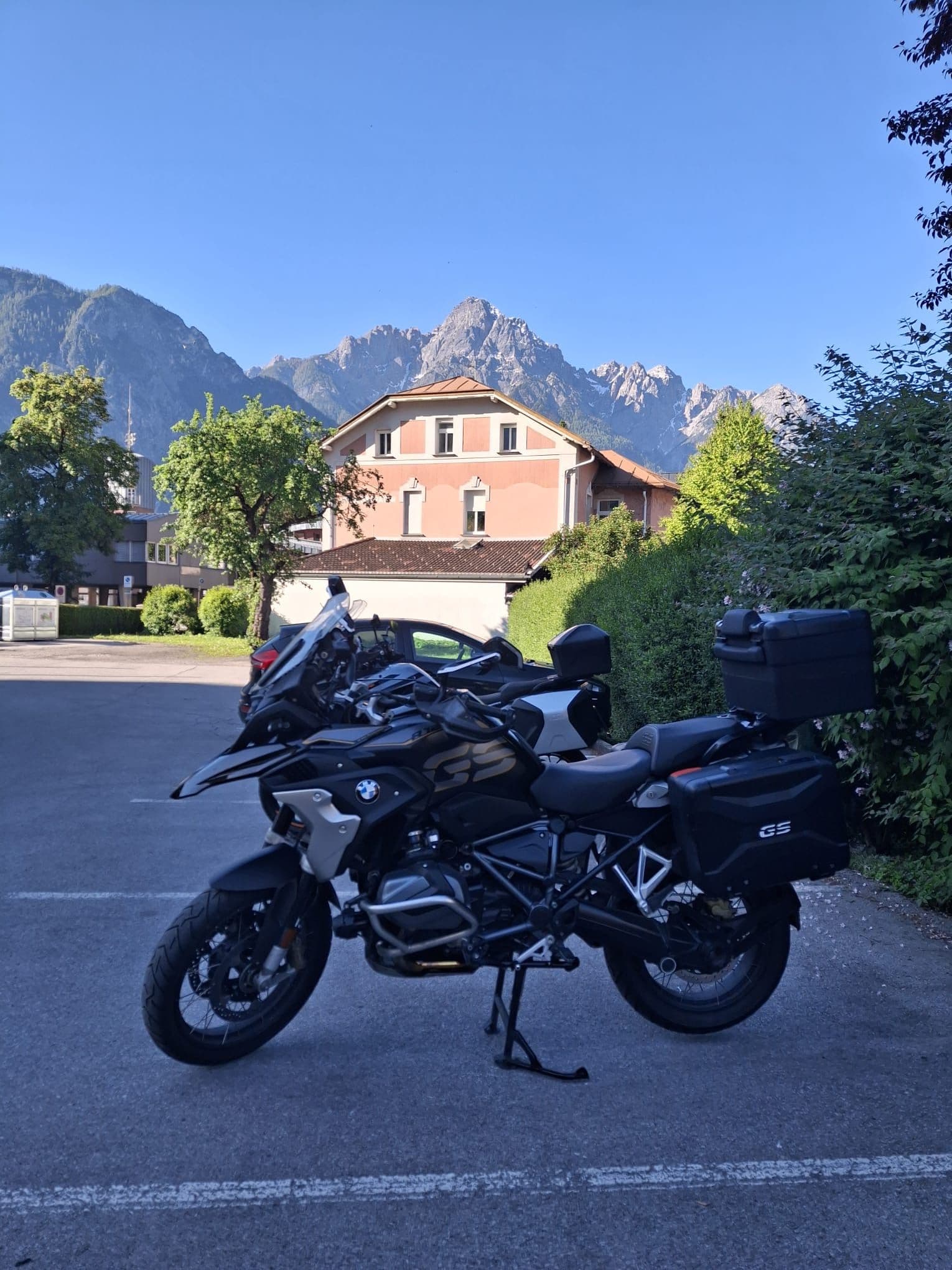
Riding Modes
Road — This is the mode I use most frequently; it is best suited to long journeys and covering large distances.
Dynamic PRO — When in the mood to ride as though on a sports bike, this is the mode to select — the motorcycle becomes noticeably faster and more aggressive. The most significant change is the very rapid throttle response: the engine reacts to throttle input within milliseconds, and power is delivered to the rear wheel almost instantaneously. I would not recommend that less experienced riders disable traction control in this mode.
Rain — This riding mode is designed for wet conditions. The engine's response to throttle input is smoother, with a more gradual delivery of power, and output is electronically reduced. This is precisely the intended purpose of the mode: for use on wet roads or unstable, damp asphalt.
Off-Road — This mode is intended for light gravel tracks or broken asphalt surfaces. The motorcycle can also handle more demanding off-road conditions; however, riders should bear in mind the machine's considerable weight (249 kg), which can make recovery considerably more difficult should the motorcycle become stuck in mud, a ditch, or a rut. Standard road tyres are adequate for gravel, but for more demanding off-road use they should be replaced with dedicated off-road tyres.
All of the riding modes function, in my view, excellently and can be switched between while riding. This is a feature I commend without reservation.
Engine, Performance, and Fuel Consumption
- The legendary boxer twin engine represents forty years of continuous development and refinement, and I have no criticism to offer of it. It produces 100 kW (136 hp) and 143 Nm of torque, and consistently provides ample power even when carrying a passenger.
- The engine delivers usable power from as low as 1,800 RPM, even in fifth and sixth gear. This characteristic contributes significantly to touring comfort and reduces the need for frequent gear changes.
- The quickshifter operates reliably and precisely, both on upshifts and downshifts.
- Fuel consumption is directly proportional to riding style: under heavier throttle use, consumption is approximately 7–7.5 litres per 100 km, whereas under more economical, relaxed riding it falls to 4.5–5 litres per 100 km — a very favourable figure given the engine's output.
- The fuel tank has a capacity of 19 litres, sufficient for approximately 300 km, which is adequate given that a rest break would in any case be required within that distance, at which point refuelling can take place.
Stability in Critical Situations
Every rider is aware that critical situations will, at some point, arise, and that one must be prepared for them. It is advisable to practise emergency manoeuvres in an open area — an airfield, a large car park, or a quiet, lightly used road — including maximum braking, full acceleration in various gears, and sharp turns to both left and right.
I have personally encountered a considerable number of critical and near-collision situations. I can confirm that under extreme braking and full acceleration the motorcycle remains stable and does not become unsettled. During sudden evasive manoeuvres, the low centre of gravity presses the motorcycle firmly toward the road surface; I was myself surprised at how effectively and dynamically I was able to avoid obstacles or prevent a collision with another vehicle. It should not be assumed, however, that the motorcycle manages such situations independently — rider experience and skill remain critical factors.
Weight and Centre of Gravity
- At 249 kg, the motorcycle is relatively heavy and has a correspondingly robust appearance; I personally consider this appropriate for a touring motorcycle of this type.
- Handling the motorcycle while stationary — placing it on the centre stand or lifting it from the ground — requires a degree of physical strength and a firm grip.
- Once in motion, even at speeds as low as 5 km/h, the low centre of gravity makes the motorcycle immediately agile and easy to control, with excellent rider feedback.
Brakes
- I do not use the rear brake; I brake using the front brake exclusively.
- The electronic system determines the distribution of braking force between the front and rear wheel automatically, based on speed and road surface conditions. This functions excellently, and I am highly satisfied with it.
- The ABS system performs equally well and is fully commendable.
The brakes on this motorcycle are genuinely excellent, and I have no criticism to make of them.
- Worthy of particular mention is the Hill Hold system: on steep inclines where setting off can be difficult, this feature proves highly useful. It is activated by firmly applying the handbrake and releases automatically upon clutch engagement — an excellent piece of engineering.
Tyres
- I have tested three tyre brands: Michelin Anakee Adventure, Continental TKC 70, and Pirelli Scorpion Trail 2.
- Of the three, the Pirelli Scorpion Trail 2 has suited me best.
- When cornering, I achieve lean angles of 40–43 degrees relative to the road surface, which is impressive for a motorcycle of this size. As riders often say, the limit has not been reached until the footpegs begin to scrape the ground. (The motorcycle is equipped with a gyroscope, allowing lean angles to be reviewed via the BMW Motorrad application.)
BMW R 1250 GS
€18,000